
0 How Retirees Can Build Steady Income Beyond Pensions and Investments
- Retirement Planning
- Author Sasha Moody
- 08-07-2026
How Retirees Can Build Steady Income Beyond Pensions and Investments
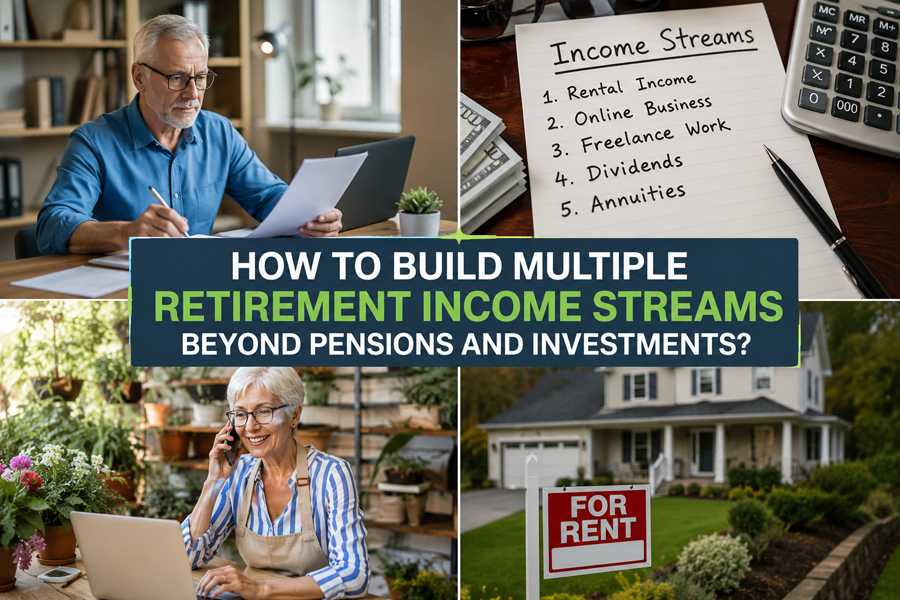
Many retirees who did everything “right” still feel uneasy when a pension or Social Security becomes their primary source of income and investment balances rise and fall with the market. The challenge is simple: monthly bills don't stop when markets decline, and a fixed income often loses purchasing power over time because of inflation. These are real retirement financial challenges, especially for households focused on maintaining both independence and peace of mind.
A smarter approach is to build multiple income streams so your monthly cash flow isn't dependent on a single source. Diversifying your retirement income can help reduce financial stress, improve long-term stability, and provide greater confidence during uncertain economic conditions.
Why Multiple Retirement Income Streams Matter
At its core, retirement income diversification means having more than one reliable way for money to reach your checking account each month. Some income sources depend on market performance, such as investment withdrawals, while others come from assets you already own or activities you choose to pursue.
Think of your retirement like a three-legged stool. One leg may be your pension or Social Security, another your retirement savings, and the third the value you've unlocked from assets you already own. If one leg weakens, the others help keep you financially balanced.
This strategy doesn't eliminate risk, but it can reduce the impact of market downturns, inflation, or unexpected expenses. It may also help you avoid withdrawing investments during unfavorable market conditions, allowing your portfolio more time to recover.
The goal isn't to create dozens of income streams. It's to build enough reliable sources that no single one carries your entire retirement.
Start by Taking Inventory of What You Already Own
Before searching for new ways to earn money, take a fresh look at the assets you already have.
Many retirees overlook opportunities because they're focused on earning more instead of making better use of what they already own.
Your retirement assets may include:
- Your home and available equity
- Permanent life insurance policies
- Retirement accounts
- Vehicles
- Garages, workshops, or storage space
- Valuable collectibles or equipment
- Professional skills and experience
Ask yourself a few simple questions:
- Does this asset still serve its original purpose?
- Am I spending money maintaining something I rarely use?
- Could this asset generate income without creating unnecessary stress?
- Would converting this asset into cash strengthen my retirement plan?
Sometimes the best income opportunities are already sitting in your driveway, basement, or filing cabinet.

Content Marketing Offers the Highest Return On Investment
Online, or content marketing and advertising, is currently the second-highest method of promoting businesses, following only Television, which, for now, remains in the number one position. Experts have predicted that digital ads will surpass TV by 2025 and not look back. For cost-effectiveness and the ability to directly target your audience, nothing matches the ROI of digital marketing. Learn More

Digital Marketing Offers Three Opportunities To Reach Your Audience
Studies show that the majority of people will use their phones to search for content that addresses their current needs and then switch to their computers for more in-depth research before making final decisions or purchases. With three different platforms, computers, tablets, and phones, it is essential to ensure your audience can follow your content and ads on any device. The upside to this is that you have three opportunities to reach them. All of our Websites are developed to work flawlessly on all three platforms. Learn More
Consider Whether a Life Settlement Fits Your Retirement Plan
One asset many retirees overlook is an older permanent life insurance policy.
Life insurance is often purchased decades before retirement to protect a young family, replace income, or help pay off debt. As life changes, those original needs may no longer exist. Children become financially independent, mortgages are paid off, and retirement savings grow.
If you own a permanent life insurance policy that no longer fits your financial goals, you may have several options. Depending on the policy, those options may include surrendering it for its cash value, accessing available policy loans, or, if you're eligible, selling the policy through a life settlement.
A life settlement allows qualified policy owners to sell an existing life insurance policy to a third-party buyer for more than its cash surrender value but less than its death benefit. The buyer assumes future premium payments and eventually receives the policy's death benefit.
For some retirees, the proceeds can provide funds for healthcare expenses, long-term care, debt reduction, travel, or simply strengthening retirement cash flow.
However, a life settlement isn't appropriate for everyone. Selling your policy generally means your beneficiaries will no longer receive the death benefit, and the transaction may have tax implications. Before making any decision, consult qualified financial, tax, and legal professionals to determine whether the option aligns with your overall retirement plan.
If you decide to explore a life settlement, consider working with an experienced broker who represents policy owners and can obtain competitive offers from multiple buyers rather than accepting the first offer available.
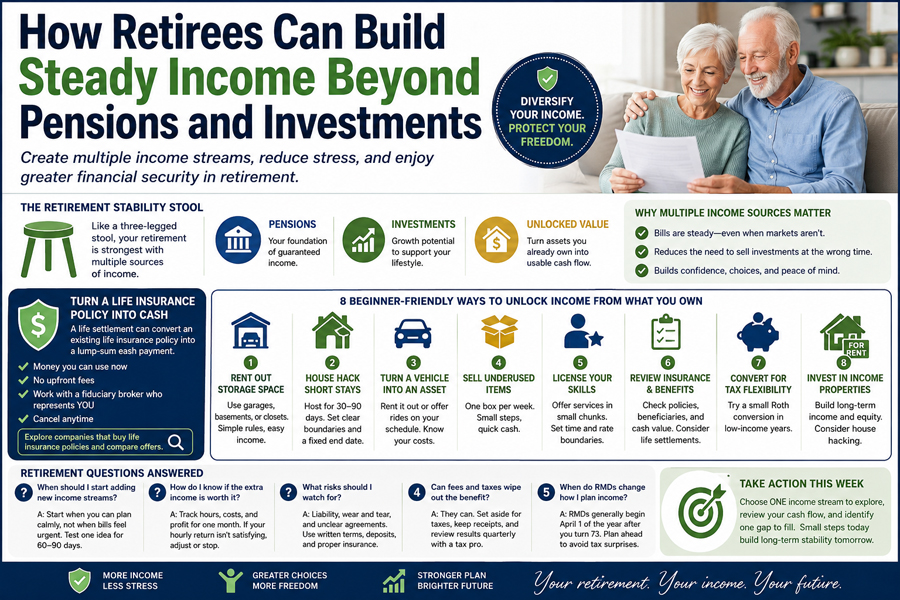
8 Practical Ways to Create Additional Retirement Income
Building multiple retirement income streams doesn't have to mean starting a business or working full-time again. Often, the best opportunities come from assets you already own or skills you've developed over a lifetime.
The goal isn't to pursue every idea on this list. Instead, choose one or two strategies that fit your lifestyle, financial goals, and comfort level. Even a modest amount of additional income can reduce pressure on your retirement savings and give you greater flexibility when unexpected expenses arise.
1. Rent Out Unused Storage Space
If your garage, basement, attic, or storage shed sits mostly empty, it may be able to generate steady monthly income.
Many people need secure storage for seasonal equipment, business inventory, recreational vehicles, or household items but don't require a full self-storage unit. Renting unused space can produce predictable income while allowing you to maintain complete control over your property.
Best For: Homeowners with secure, accessible storage space.
Things to consider: Create a written agreement, verify your insurance coverage, and clearly define what items can and cannot be stored.
Getting started: Research comparable storage rates in your area and begin with a month-to-month agreement until you're comfortable with the arrangement.
2. Rent a Room on Your Terms
If you have an extra bedroom, a furnished room rental may provide supplemental income without the commitment of a long-term roommate.
Some retirees prefer renting to traveling professionals, visiting nurses, graduate students, or seasonal workers because the arrangements typically have defined end dates.
The key is establishing expectations from the beginning, including house rules, guest policies, parking, shared spaces, and quiet hours.
Best For: Homeowners who enjoy occasional social interaction and have suitable living space.
Things to consider: Review local zoning requirements, rental regulations, and tax obligations before advertising the room.
Getting started: Decide what type of renter best matches your lifestyle before creating a listing.
3. Put an Underused Vehicle to Work
Many retirees own a second vehicle that's driven only occasionally.
Depending on your circumstances, you may be able to generate income by renting the vehicle through a reputable car-sharing platform or by using it for occasional work that fits your schedule.
Before moving forward, calculate the true cost of ownership—including fuel, maintenance, depreciation, insurance, and cleaning—to determine whether the income justifies the additional wear and tear.
Best For: Owners of reliable vehicles that are seldom used.
Things to consider: Confirm that your insurance policy provides appropriate coverage for the intended use.
Getting started: Estimate your annual ownership costs before accepting your first booking.
4. Turn Unused Belongings Into Cash
Most households accumulate thousands of dollars' worth of items that are rarely used.
Tools, sporting equipment, collectibles, furniture, hobby supplies, electronics, and household goods can often be sold through local marketplaces or online platforms.
Rather than trying to declutter your entire home in one weekend, set a manageable goal of listing one box of items each week. The process becomes less overwhelming, and the proceeds can help build an emergency fund or supplement monthly income.
Best For: Anyone looking for a simple, low-risk way to generate extra cash.
Things to consider: Keep records of significant sales, especially if you're selling high-value items.
Getting started: Walk through your home with a box and identify items you haven't used in the past year.
5. Turn Your Experience Into Flexible Income
Retirement doesn't mean the knowledge you've accumulated over a lifetime loses its value. In fact, your professional experience, hobbies, or specialized skills may be among your most valuable assets.
Rather than committing to a traditional part-time job, consider opportunities that let you work on your own terms. Consulting, tutoring, bookkeeping, proofreading, tax preparation, woodworking, photography, music lessons, pet sitting, or teaching community education classes can all provide supplemental income while allowing you to control your schedule.
The goal is to earn money without sacrificing the freedom retirement offers. Even working a few hours each week can help cover discretionary expenses such as travel, dining out, or holiday gifts, reducing the need to withdraw additional money from your retirement accounts.
Best For: Retirees who enjoy staying active and sharing their expertise.
Things to consider: Set clear boundaries around your availability. Retirement should enhance your quality of life—not recreate the demands of a full-time career.
Getting started: Make a list of the skills people have asked you for help with over the years. Those requests often reveal services others are willing to pay for.
6. Review Your Life Insurance and Other Financial Assets
Many retirees faithfully continue paying premiums on insurance policies purchased decades earlier without revisiting whether those policies still fit their financial goals.
An annual review can help you determine whether your coverage remains appropriate, whether your beneficiaries should be updated, or whether changes in your financial situation have created new opportunities.
For owners of permanent life insurance, this may include requesting an in-force illustration to better understand the policy's current value, projected performance, and premium requirements. If the policy no longer serves its original purpose, it may also be worth discussing alternatives with a qualified advisor, including surrendering the policy, accessing available cash value, or—if you meet the eligibility requirements—exploring whether a life settlement makes financial sense.
Best For: Retirees with older permanent life insurance policies or changing estate planning goals.
Things to consider: Decisions involving life insurance can affect beneficiaries, taxes, and long-term financial planning. Review all available options before making changes.
Getting started: Schedule a policy review with your insurance professional and request updated policy information before deciding on your next steps.
7. Explore Tax-Smart Retirement Planning Strategies
Creating retirement income isn't only about earning more money—it's also about keeping more of what you already have.
Tax planning plays an important role in retirement, and one strategy that may be appropriate for some households is a partial Roth conversion. By converting a portion of a traditional IRA to a Roth IRA during lower-income years, some retirees can reduce future required withdrawals and create a source of tax-free qualified withdrawals later in retirement.
However, Roth conversions are not one-size-fits-all. The converted amount is generally taxable in the year of the conversion, and it may affect Medicare premiums, the taxation of Social Security benefits, or your overall tax bracket.
Best For: Retirees who expect higher future tax rates or want greater flexibility in managing taxable income.
Things to consider: Work with a qualified tax professional before making conversion decisions to understand both the immediate and long-term impact.
Getting started: Ask your tax advisor to prepare a "what-if" analysis showing how different conversion amounts could affect your taxes over several years.
8. Consider Income-Producing Real Estate Carefully

Real estate has long been a popular way to build wealth and generate income, but becoming a landlord isn't the right choice for every retiree.
Rental properties can provide ongoing cash flow and long-term appreciation, yet they also come with responsibilities that include maintenance, vacancies, insurance, property taxes, repairs, and compliance with local landlord-tenant laws.
If you already own significant home equity, purchasing another property may be one option worth exploring. Some retirees choose to move into a newly purchased home while renting out their previous residence, potentially qualifying for owner-occupied financing on the new home. Others prefer investing in professionally managed rental properties or real estate investment trusts (REITs), which can offer exposure to real estate without directly managing tenants.
The best choice depends on your financial goals, risk tolerance, available time, and desire for hands-on involvement.
Best For: Retirees with sufficient financial resources, a long-term investment horizon, and an interest in real estate.
Things to consider: Carefully evaluate financing costs, cash flow projections, maintenance expenses, and the possibility of extended vacancies before purchasing additional property.
Getting started: Prepare a realistic budget that includes mortgage payments, insurance, taxes, maintenance, and vacancy reserves. Then compare your projected return with other investment opportunities before making a decision.

Retirement Income Questions People Ask Most
When Should I Start Creating Additional Retirement Income Streams?
The best time to diversify your retirement income is before you feel financial pressure. Planning ahead allows you to evaluate opportunities carefully rather than making decisions because you're worried about next month's bills.
Even one modest source of additional income can make a meaningful difference over time. It may help cover recurring expenses such as insurance premiums, property taxes, or travel while reducing the amount you need to withdraw from retirement accounts.
Start with one strategy that matches your lifestyle and review the results after several months. If it fits comfortably into your retirement routine, consider whether adding another income stream makes sense.
How Much Additional Income Do I Really Need?
That depends on your goals.
Some retirees simply want enough extra income to preserve their investment portfolio during market downturns. Others want additional cash flow to fund travel, hobbies, or gifts for family members.
Rather than setting an arbitrary income target, begin by identifying your monthly spending gap.
Ask yourself:
- What expenses are already covered by guaranteed income?
- Which expenses currently require investment withdrawals?
- How much additional monthly income would make you feel more financially secure?
Often, an additional few hundred dollars each month can reduce financial stress more than people expect.
Is Passive Income Really Passive?
Not always.
Many retirement income ideas require some effort to establish and maintain. Rental properties need maintenance. Storage rentals require oversight. Consulting work depends on finding clients. Even dividend investments require periodic review.
A better way to think about passive income is as lower-maintenance income, not effort-free income.
The objective is to choose income sources that match the amount of time and energy you want to invest during retirement.
What Are the Biggest Risks?
Every income strategy involves trade-offs.
Rental properties may experience vacancies or unexpected repairs.
Part-time work requires time and commitment.
Selling valuable assets may reduce future appreciation.
Life settlements eliminate or reduce the death benefit associated with the policy.
Tax strategies such as Roth conversions may increase taxable income in the year of the conversion.
The solution isn't avoiding risk altogether. It's understanding the risks before making decisions and selecting strategies that fit your financial goals and personal comfort level.
Can Taxes Reduce the Benefits?
Yes.
Additional income may affect federal and state income taxes, Medicare premiums, taxation of Social Security benefits, or other financial planning considerations.
Before implementing a significant strategy, estimate the after-tax benefit rather than focusing only on the gross income.
Working with a qualified tax professional can help ensure that an otherwise good financial decision doesn't create unintended tax consequences.
How Often Should I Review My Retirement Income Plan?
At least once each year.
Life changes. Markets change. Tax laws change. Your retirement income plan should evolve as well.
An annual review gives you an opportunity to evaluate your income sources, update beneficiaries, reassess insurance needs, review investment withdrawals, and determine whether your current strategy still supports your long-term goals.
Small adjustments made consistently are often more effective than major changes made during periods of financial stress.
Choosing the Right Strategy for You
Not every income strategy belongs in every retirement plan, and that's perfectly okay.
Some retirees prioritize predictable monthly income. Others value flexibility, preserving assets for heirs, or minimizing taxes. The right mix depends on your goals, health, family circumstances, and overall financial picture.
Rather than trying to implement several ideas at once, choose one strategy that fits comfortably within your lifestyle. Test it, evaluate the results after a few months, and decide whether it deserves a permanent place in your retirement income plan.
Small improvements made consistently often have a greater long-term impact than major financial decisions made under pressure.
Remember, retirement income isn't about finding one perfect solution. It's about creating a balanced combination of income sources that helps you maintain the lifestyle you've worked so hard to achieve while giving you the confidence to navigate whatever the future may bring.
Retirement Income Checklist
✓ I know where every dollar of my retirement income comes from.
✓ No single income source covers all of my monthly expenses.
✓ I've reviewed my insurance policies within the last two years.
✓ I've considered whether underused assets could strengthen my retirement plan.
✓ I understand the tax implications of my withdrawal strategy.
✓ I have an emergency cash reserve.
✓ I review my retirement income plan at least once each year.
All Images generated by AI
Discover the secrets to aging gracefully and living your best life with Enjoying Aging – your ultimate resource for health, wellness, and financial wisdom!
A special thank you to Sasha Moody at The Patient Investor for contributing this article.
Sasha Moody is The Patient Investor. She created her website to help people grow their wealth steadily over time. As someone who began learning about the importance of investing just a few years ago, Sasha wanted to find a way to help others who are relatively new to investing build their confidence around it so that they can take advantage of its wealth-building potential. She knows that it can be a daunting task to try and learn everything there is to know about investing, so she has compiled resources and other information on The Patient Investor that she found helpful when she was starting out.
If you enjoyed this article or have a topic you would like to suggest for a new article, please leave a comment in the form below.