
0 Understanding the Real Differences Between Dementia and Alzheimer's Disease
- Mental Health
- Author Sara W.
- 11-25-2026

Understanding the Real Differences Between Dementia and Alzheimer's Disease
Estimated reading time: 12–15 minutes
Introduction: Why Dementia and Alzheimer's Disease Are Often Confused
If you've ever wondered, "What's the difference between dementia and Alzheimer's disease?" you're certainly not alone. These two terms are frequently used interchangeably, even by people who are familiar with the conditions. However, dementia and Alzheimer's disease are not the same thing.
Understanding the difference between dementia and Alzheimer's disease is important because it can influence how someone is diagnosed, what treatments may be available, and how families prepare for the future.
Perhaps you've noticed changes in your own memory, or maybe you've become concerned about an aging parent who seems increasingly forgetful. You might have questions about whether these changes are simply part of getting older or could indicate something more serious.
Although occasional forgetfulness can be a normal part of aging, significant changes in memory, reasoning, communication, or everyday functioning deserve attention. Knowing what to look for can help you recognize when it's time to speak with a healthcare professional.
This guide explains the differences between dementia and Alzheimer's disease, explores several other common types of dementia, and discusses symptoms, causes, diagnosis, treatment, and practical steps families can take.
The goal is not to create unnecessary concern. Rather, it's to provide the knowledge you need to ask better questions, make informed decisions, and approach the future with greater confidence.
1. The Big Difference: What Is Dementia, and What Is Alzheimer's Disease?
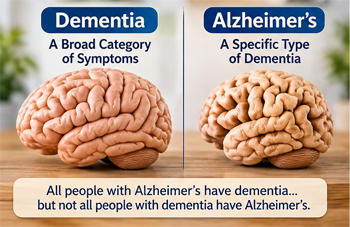
The easiest way to understand the difference between dementia and Alzheimer's disease is to think about categories.
Dementia is an umbrella term describing a group of symptoms that interfere with a person's ability to think, remember, reason, communicate, and manage everyday activities. It is not a single disease.
Alzheimer's disease, on the other hand, is a specific progressive brain disease that causes dementia symptoms as it advances.

Content Marketing Offers the Highest Return On Investment
Online content marketing and advertising is currently the second-highest method of promoting businesses, following only Television, which, for now, remains in the number one position. Experts predict digital ads will surpass TV and never look back. For cost-effectiveness and the ability to target your audience, nothing matches the ROI of digital marketing. Learn More

Digital Marketing Offers Three Opportunities To Reach Your Audience
Studies show that most people use their phones to search for content that addresses their current needs, then switch to their computers for more in-depth research before making a final decision or purchase. With three different platforms- computers, tablets, and phones- it is essential to ensure your audience can follow your content and ads on any device. The upside to this is that you have three opportunities to reach them. All of our Websites are developed to work flawlessly on all three platforms. Learn More
Think of it this way: all apples are fruit, but not all fruit is an apple. Similarly, Alzheimer's disease can cause dementia, but not everyone who develops dementia has Alzheimer's disease.
Dementia may affect several aspects of cognitive functioning, including:
- Memory: Forgetting recent conversations, appointments, or important information.
- Reasoning: Having difficulty understanding situations or making sound decisions.
- Communication: Struggling to find words, follow conversations, or express thoughts.
- Problem-solving: Having trouble completing familiar tasks or managing finances.
- Behavior: Experiencing changes in personality, judgment, or emotional responses.
- Daily functioning: Finding it increasingly difficult to manage household responsibilities, medications, or personal care.
Alzheimer's disease is the most common cause of dementia, accounting for an estimated 60% to 80% of cases. This helps explain why people often confuse the two conditions.
However, several other diseases and neurological conditions can produce dementia symptoms, and each may affect the brain differently.
Understanding these distinctions is the first step toward recognizing why an accurate diagnosis matters.
2. The Major Types of Dementia Other Than Alzheimer's
Although Alzheimer's disease receives considerable attention, it is important to recognize that it is not the only condition responsible for dementia.
Some of the other major forms include vascular dementia, Lewy body dementia, frontotemporal dementia, and mixed dementia.
Each has different underlying causes and may produce a somewhat different combination of symptoms.
Vascular Dementia
Vascular dementia develops when damage to blood vessels interferes with the delivery of sufficient blood and oxygen to the brain. This damage may occur following a stroke or as a result of long-term problems affecting the brain's blood supply.
Unlike Alzheimer's disease, which commonly begins with difficulty forming and retaining new memories, vascular dementia may initially affect:
- Planning and organization.
- Decision-making and judgment.
- Concentration and attention.
- Processing information.
- Walking, balance, and movement.
Symptoms sometimes develop suddenly following a stroke. In other cases, changes occur gradually as blood vessel damage accumulates.
Some people experience a pattern in which their abilities remain relatively stable before declining following another vascular event. However, progression varies considerably.
Managing cardiovascular risk factors, including high blood pressure, diabetes, and high cholesterol, is an important part of reducing further vascular damage.
Lewy Body Dementia
Lewy body dementia develops when abnormal deposits of a protein called alpha-synuclein accumulate in the brain. These deposits, known as Lewy bodies, interfere with normal brain functioning.
This condition has several characteristics that distinguish it from typical Alzheimer's disease.
Common symptoms include:
- Detailed visual hallucinations.
- Significant fluctuations in attention and alertness.
- Difficulty with balance, walking, and movement.
- Muscle stiffness or tremors.
- Sleep disturbances, including acting out dreams.
- Problems with thinking, reasoning, and memory.
One particularly distinctive feature is that a person may seem relatively alert and capable at one point in the day but become noticeably confused or less responsive at another.
Lewy body dementia is sometimes confused with Alzheimer's or Parkinson's disease because the symptoms can overlap.
An accurate diagnosis is especially important because certain medications used for other conditions may cause serious adverse reactions in some people with Lewy body dementia.
Frontotemporal Dementia (FTD)
Frontotemporal dementia affects areas of the brain responsible for personality, behavior, language, and decision-making.
Unlike Alzheimer's disease, which frequently begins with memory problems, frontotemporal dementia may initially produce noticeable changes in personality or communication.
Symptoms can include:
- Uncharacteristic impulsive behavior.
- Reduced sensitivity to other people's feelings.
- Changes in personality or social judgment.
- Difficulty understanding or producing language.
- Repetitive or unusual behaviors.
- Changes in eating habits or food preferences.
Frontotemporal dementia often develops earlier in life than Alzheimer's disease, commonly affecting people between their mid-40s and mid-60s.
Because early memory may remain relatively intact, family members sometimes mistake the initial changes for stress, depression, or ordinary personality differences.
Recognizing these behavioral and language changes can help families seek an appropriate evaluation.
Mixed Dementia
Mixed dementia occurs when a person has more than one underlying condition contributing to cognitive decline.
For example, someone may have both Alzheimer's-related brain changes and damage associated with vascular disease.
Mixed dementia is particularly important to understand because dementia does not always fit neatly into one diagnostic category.
A person may experience symptoms associated with several conditions simultaneously, making diagnosis and treatment more complicated.
In fact, research suggests that mixed brain pathologies are relatively common among older adults living with dementia.
National Institute on Aging (NIH)
3. Comparing Dementia and Alzheimer's Symptoms
One reason these conditions are frequently confused is that their symptoms overlap.
Since Alzheimer's disease is itself a form of dementia, people living with Alzheimer's can experience many of the same difficulties associated with other dementia conditions.
However, the symptoms that appear first, how they develop, and the way they affect everyday life can provide important diagnostic clues.
Memory Loss: Dementia vs. Alzheimer's
Memory loss is one of the best-known symptoms of Alzheimer's disease.
People with Alzheimer's frequently experience difficulty learning and retaining new information. They may repeat questions, forget recent conversations, misplace familiar belongings, or struggle to remember appointments.
As the disease progresses, these memory difficulties may become increasingly disruptive.
Other forms of dementia can affect memory differently.
For example:
- A person with vascular dementia may initially struggle more with planning, concentration, and decision-making.
- Someone with frontotemporal dementia may experience significant personality or language changes while retaining relatively good memory during the early stages.
- A person with Lewy body dementia may experience memory difficulties alongside pronounced changes in attention and alertness.
These differences are helpful clues, but they are not reliable enough to establish a diagnosis without medical evaluation.
Cognitive Changes Beyond Memory
Memory is only one part of cognitive functioning.
Other abilities that may be affected by dementia include:
Reasoning and problem-solving: Someone may have difficulty making decisions, following instructions, or understanding situations that previously seemed straightforward.
Language and communication: Finding the right words, understanding conversations, or expressing thoughts may become increasingly difficult.
Attention and concentration: A person may struggle to follow conversations, complete familiar activities, or remain focused on a task.
Spatial awareness: Some people experience difficulty judging distances, recognizing familiar surroundings, or navigating places they have visited many times.
The particular abilities affected often depend on the underlying condition and the areas of the brain involved.
Behavioral and Personality Changes
Changes in behavior can be especially difficult for families because they may seem completely out of character.
Someone who was previously patient and sociable might become irritable, withdrawn, anxious, or suspicious.
In Alzheimer's disease, behavioral changes may become more noticeable as the condition progresses.
With frontotemporal dementia, however, changes in personality, judgment, and social behavior may be among the earliest symptoms.
Lewy body dementia may involve visual hallucinations, fluctuating alertness, and sleep-related behavioral changes.
It is important to remember that these symptoms are not deliberate choices. They may reflect changes in how the brain processes information, emotions, and surroundings.
Understanding this can help family members respond with patience rather than frustration.
4. Early Warning Signs: When Should You Be Concerned?
Recognizing the early signs of dementia can help families arrange an evaluation before problems become more disruptive.
Although occasional forgetfulness is common, persistent changes that interfere with everyday activities should not be dismissed as normal aging.
Some warning signs include:
- Repeatedly forgetting recent information: Asking the same questions several times or forgetting conversations that occurred recently.
- Difficulty managing familiar responsibilities: Having trouble paying bills, organizing appointments, or following a familiar recipe.
- Problems finding words: Frequently struggling to name familiar objects or follow conversations.
- Getting confused in familiar places: Having difficulty navigating an area that was previously easy to recognize.
- Changes in judgment: Making decisions that seem unusually risky or out of character.
- Withdrawal from social activities: Losing interest in hobbies, conversations, or activities previously enjoyed.
- Noticeable personality changes: Becoming unusually suspicious, impulsive, anxious, or socially inappropriate.
- Difficulty completing familiar tasks: Struggling with activities that were once part of an established daily routine.
Different types of dementia may produce different combinations of these symptoms.
For example, repeated difficulty retaining new information is commonly associated with Alzheimer's disease, while early personality changes may raise questions about frontotemporal dementia.
Visual hallucinations and fluctuating alertness may prompt a physician to investigate Lewy body dementia.
However, no single symptom confirms a particular type of dementia.
An important distinction: Sudden confusion or an abrupt change in mental functioning should receive prompt medical attention. Infection, medication reactions, dehydration, metabolic problems, and other acute medical conditions can cause confusion. Sudden symptoms should not automatically be attributed to dementia.

5. What Causes Dementia and Alzheimer's Disease?
Although dementia and Alzheimer's disease can produce similar symptoms, the underlying changes in the brain are different.
Understanding these changes helps explain why the conditions progress differently and why treatment options depend on the specific diagnosis.
What Causes Alzheimer's Disease?
Alzheimer's disease is associated with the abnormal accumulation of two proteins in the brain: beta-amyloid and tau.
Beta-amyloid can collect outside brain cells, forming deposits known as amyloid plaques. Tau proteins can develop abnormal changes and form tangles inside brain cells.
These changes interfere with communication between nerve cells and contribute to damage and eventual loss of brain tissue.
As more brain cells and their connections become affected, memory, reasoning, language, and other cognitive abilities gradually decline.
Several factors may influence a person's likelihood of developing Alzheimer's, including:
- Age: The greatest known risk factor is advancing age, although Alzheimer's is not an inevitable part of getting older.
- Family history: Having a close relative with Alzheimer's may increase risk.
- Genetics: Certain genetic variations influence susceptibility to the disease.
- Cardiovascular health: Conditions affecting blood vessels and circulation may contribute to overall brain health and dementia risk.
- Lifestyle and environmental factors: Physical inactivity, smoking, poor sleep, and other health-related factors may influence cognitive health.
Researchers continue investigating how these factors interact and contribute to the development of Alzheimer's disease.
What Causes Other Types of Dementia?
Other forms of dementia have different underlying causes.
Vascular dementia: Results from damage to blood vessels or reduced blood flow to brain tissue. Strokes and small vessel disease are common contributors.
Lewy body dementia: Associated with abnormal deposits of alpha-synuclein protein in the brain.
Frontotemporal dementia: Involves the loss of nerve cells in the frontal and temporal regions of the brain. Certain protein abnormalities and inherited genetic changes may contribute.
Mixed dementia: Develops when more than one disease process contributes to cognitive impairment.
It is also worth recognizing that some medical conditions can cause symptoms that resemble dementia. Medication side effects, vitamin deficiencies, thyroid problems, depression, sleep disorders, and infections are among the possibilities.
Some of these problems can improve when their underlying cause is identified and treated. This is another reason why a thorough medical evaluation is essential.
6. Dementia vs. Alzheimer's: Age of Onset and Progression
Another important difference between dementia and Alzheimer's disease involves when symptoms typically begin and how they progress.
At What Age Does Alzheimer's Disease Usually Begin?
Most people diagnosed with Alzheimer's disease first experience symptoms after age 65.
However, younger individuals can also develop the condition. This is known as early-onset Alzheimer's disease.
Early-onset Alzheimer's is relatively uncommon and may begin during a person's 40s, 50s, or early 60s.
Age is an important risk factor, but it is not the only consideration when evaluating someone experiencing cognitive changes.
When Can Other Types of Dementia Begin?
Different forms of dementia have different patterns of onset.
- Frontotemporal dementia: Frequently begins between ages 45 and 65, although it can occur outside this range.
- Lewy body dementia: Most commonly develops during later adulthood.
- Vascular dementia: Often occurs in older adults and may develop following a stroke or as vascular damage accumulates.
- Mixed dementia: Becomes more common with advancing age, particularly when multiple brain conditions are present.
These are general patterns rather than strict age limits.
How Does Alzheimer's Disease Progress?
Alzheimer's disease generally progresses gradually over several years.
Although every individual experiences the condition differently, healthcare professionals commonly describe its progression using three broad stages.
Early Stage: Mild Alzheimer's
During the early stage, a person may still live independently but begin experiencing noticeable difficulties with recent memories, organization, and planning.
They might forget appointments, repeat questions, or struggle to remember newly learned information.
At this point, many people can continue participating in familiar activities with relatively little assistance.
Middle Stage: Moderate Alzheimer's
The middle stage is often the longest.
Memory problems become more pronounced, and individuals may need help managing household responsibilities, medications, finances, and personal activities.
Confusion and behavioral changes may become more noticeable.
Families may also need to make adjustments to the home environment and establish more consistent daily routines.
Late Stage: Severe Alzheimer's
During the later stage, individuals generally require substantial assistance with everyday activities.
Communication may become increasingly difficult, and mobility, eating, and personal care may require ongoing support.
Although these stages provide a useful general framework, the timing and severity of symptoms vary from person to person.
How Does Other Dementia Progress?
Other forms of dementia may follow different patterns.
Vascular dementia can sometimes involve periods of relative stability followed by noticeable declines associated with additional vascular damage.
Lewy body dementia may involve significant fluctuations in thinking, attention, and physical functioning.
Frontotemporal dementia can produce progressive changes in personality, behavior, language, or movement.
Because these conditions differ, families should avoid assuming that every person diagnosed with dementia will experience the same symptoms or follow the same timeline.
7. How Are Dementia and Alzheimer's Disease Diagnosed?
An accurate diagnosis is one of the most important steps toward determining what is happening and identifying appropriate treatment options.
Doctors generally approach the evaluation by answering two questions:
- Is the person experiencing cognitive changes significant enough to interfere with everyday functioning?
- If so, what underlying condition is causing those changes?
The evaluation may involve several different procedures.
Medical History and Physical Examination
A healthcare professional will generally ask about the person's medical history, medications, family history, and the changes that have been observed.
Questions may include:
- When did the memory or behavioral changes first become noticeable?
- Have the symptoms become more frequent?
- Are there difficulties with everyday responsibilities?
- Have there been changes in sleep, mood, or personality?
- Has the person experienced a stroke or other significant medical event?
Information from family members can be especially helpful because they may recognize changes that the individual has not noticed.
Cognitive and Neurological Testing
Doctors may use screening tools to evaluate memory, attention, language, reasoning, and problem-solving abilities.
A neurological examination may also evaluate coordination, balance, reflexes, and other physical functions.
These assessments help determine whether further testing is necessary.
Blood Tests and Brain Imaging
Blood tests may help identify medical conditions that contribute to memory problems, including thyroid abnormalities and certain vitamin deficiencies.
Brain imaging may also be recommended.
- MRI: Provides detailed images of brain structures and may identify changes associated with strokes, vascular disease, or other conditions.
- CT scan: Can help identify certain structural abnormalities and evidence of previous strokes or other brain problems.
- PET scan: Specialized imaging may help identify patterns associated with Alzheimer's disease and other neurological conditions.
In selected cases, physicians may also recommend cerebrospinal fluid testing or blood-based biomarkers to help determine whether Alzheimer's-related biological changes are present.
These tests are becoming increasingly important as diagnostic technology advances.
However, no single test is appropriate for every patient. The physician determines which evaluations are necessary based on the individual's symptoms and medical history.

8. Treatment Options: What Can Be Done?
One of the most common questions families ask after receiving a dementia diagnosis is whether the condition can be treated.
Although there is currently no cure for most progressive forms of dementia, several treatment options can help manage symptoms, support everyday functioning, and improve quality of life.
Treatment depends on the underlying cause, the individual's overall health, and the stage of the condition.
Medications for Alzheimer's Disease
Several medications are used to help manage symptoms associated with Alzheimer's disease.
Cholinesterase inhibitors, including donepezil, rivastigmine, and galantamine, may help improve or maintain certain cognitive abilities for a period of time in some individuals.
Memantine may be prescribed for moderate to severe Alzheimer's disease to help manage symptoms involving memory, reasoning, and everyday functioning.
These medications do not cure Alzheimer's or stop the underlying disease process.
However, they may provide meaningful benefits for some patients.
Newer Alzheimer's Treatments
In recent years, medical research has produced medications that target the underlying biology of Alzheimer's disease rather than simply addressing its symptoms.
Two important examples are lecanemab (Leqembi) and donanemab (Kisunla).
These medications target amyloid proteins in the brain and have been shown to modestly slow disease progression in certain individuals with early Alzheimer's disease.
They are intended for carefully selected patients with mild cognitive impairment or mild dementia due to Alzheimer's, with confirmation of amyloid pathology.
These treatments are not appropriate for everyone.
They also carry important risks, including amyloid-related imaging abnormalities (ARIA), which can involve brain swelling or small areas of bleeding. Patients require medical supervision and appropriate monitoring.
Families considering these treatments should discuss potential benefits, risks, eligibility, and monitoring requirements with a qualified specialist.
It is important to understand that these medications slow progression in some eligible patients; they do not reverse Alzheimer's disease or restore lost cognitive abilities.
alz-journals.onlinelibrary.wiley.com
Treatment for Other Types of Dementia
Treatment for vascular dementia focuses heavily on managing the underlying conditions that contribute to blood vessel damage.
This may involve controlling blood pressure, managing diabetes, treating high cholesterol, and reducing the risk of additional strokes.
Lewy body dementia treatment requires particular care because some medications can worsen symptoms or produce serious reactions.
Treatment may involve medications for cognitive symptoms, movement difficulties, and sleep disturbances, along with supportive therapies.
Frontotemporal dementia treatment generally focuses on managing behavioral, emotional, language, and functional difficulties.
Speech therapy, occupational therapy, structured routines, and appropriate medications may help individuals and their families manage some of the challenges associated with the condition.
The Importance of Lifestyle and Everyday Support
Medical treatment is only one part of caring for someone with dementia.
Everyday habits and environmental adjustments can also make a meaningful difference.
Helpful approaches include:
- Regular physical activity: Walking and other appropriate forms of exercise support cardiovascular health and general well-being.
- Nutritious eating habits: A balanced diet supports overall health and provides essential nutrients.
- Consistent sleep routines: Good sleep habits may help support daytime functioning and emotional well-being.
- Social interaction: Maintaining relationships and participating in enjoyable activities can help reduce isolation.
- Mental stimulation: Reading, music, puzzles, hobbies, and learning activities provide opportunities for engagement.
- Hearing and vision care: Addressing sensory difficulties can make communication and everyday activities easier.
- A familiar environment: Reducing unnecessary distractions and maintaining predictable routines may help limit confusion.
These strategies are not cures for dementia, but they can support comfort, independence, and quality of life.

9. Dementia and Alzheimer's in Elderly Parents: A Practical Family Guide
For many adults, concerns about dementia or Alzheimer's disease first arise when they begin noticing changes in an aging parent.
Perhaps your mother has started repeating the same stories during family gatherings. Maybe your father has become less organized with his finances, or someone who once enjoyed social activities has gradually withdrawn.
These changes can be difficult to discuss, particularly when the person involved is reluctant to acknowledge that anything is wrong.
However, approaching the situation with patience, understanding, and preparation can make a significant difference.
Here are several practical steps families can take.
1. Pay Attention to Specific Changes
Rather than simply saying that a parent seems more forgetful, document specific examples.
For instance:
- Forgetting important appointments.
- Repeatedly asking the same questions.
- Having difficulty managing household finances.
- Becoming confused while driving familiar routes.
- Struggling with activities that were previously routine.
Make a note of when these changes occur and whether they appear to be becoming more frequent.
This information can help a physician better understand the situation.
2. Approach the Conversation With Compassion
Discussing memory problems can be uncomfortable.
Your parent may feel embarrassed, frustrated, or concerned about losing independence.
Avoid correcting every mistake or making the conversation feel like an interrogation.
Instead, express your concerns in a supportive manner.
You might explain that you've noticed a few changes and would like to arrange a routine medical appointment to make sure everything is okay.
The goal is to encourage cooperation rather than create unnecessary anxiety.
3. Schedule a Medical Evaluation
If cognitive changes are affecting everyday life, arrange an appointment with a healthcare professional.
Whenever possible, accompany your parent to the appointment.
Having someone familiar with the changes present can help ensure that important information is communicated accurately.
Prepare a list of symptoms, medications, and questions before the visit.
If necessary, ask whether a referral to a neurologist, geriatrician, or memory specialist would be appropriate.
4. Begin Planning for Future Needs
Although it may seem premature, discussing future arrangements while your parent can actively participate in decisions is extremely valuable.
Consider reviewing:
- Healthcare directives.
- Financial planning arrangements.
- Durable powers of attorney.
- Living arrangements and support needs.
- Emergency contacts and medical information.
These discussions can help families avoid making difficult decisions during an already stressful period.
Legal requirements vary by state, so consulting an appropriate professional is advisable.
5. Make the Home Environment More Supportive
As dementia progresses, certain everyday activities may become increasingly challenging.
Simple adjustments can help make the home safer and easier to navigate.
For example:
- Improve lighting in hallways and frequently used rooms.
- Reduce unnecessary clutter.
- Use labels or signs to identify important areas.
- Keep frequently used belongings in consistent locations.
- Establish predictable daily routines.
- Review home safety and supervision needs as circumstances change.
An occupational therapist can also provide recommendations tailored to the individual's abilities and living environment.
6. Remember That Caregivers Need Support, Too
Helping a parent who has dementia or Alzheimer's can become emotionally and physically demanding.
Family caregivers often find themselves balancing employment, household responsibilities, family relationships, and increasingly complex caregiving needs.
It is important to recognize that you cannot provide effective long-term support without taking care of your own well-being.
Consider caregiver support groups, respite care, community services, and assistance from other family members.
Taking advantage of available support is not a failure. It is a practical way to make caregiving more sustainable.
10. When Should Families Consider Additional Care?
As dementia progresses, families may eventually need to consider whether additional assistance is necessary.
For some individuals, remaining at home with family support and professional assistance may continue to be appropriate.
Others may benefit from adult day programs, in-home care, assisted living, or specialized memory care.
The right arrangement depends on the person's needs, safety, preferences, available family support, and financial circumstances.
In-Home Care
In-home care allows individuals to remain in familiar surroundings while receiving assistance with everyday activities.
Depending on the services provided, support may include companionship, meal preparation, personal care, medication reminders, and help with household responsibilities.
This arrangement can be particularly helpful when someone needs assistance but does not require continuous supervision.
Assisted Living
Assisted living communities provide housing, meals, social opportunities, and varying levels of personal assistance.
Some communities also offer additional services called memory care for residents experiencing memory-related difficulties.
However, not every assisted living community is equipped to provide the same level of dementia support.
Families should ask about staff training, supervision, safety procedures, and the availability of specialized memory care.
Memory Care
Memory care programs are designed specifically for individuals living with Alzheimer's disease and other forms of dementia.
These programs generally emphasize structured routines, appropriate supervision, supportive activities, and environments designed to address memory-related challenges.
When evaluating a memory care community, families should consider:
- Staff experience and dementia-specific training.
- Supervision and emergency procedures.
- Opportunities for meaningful activities.
- Dining and personal care assistance.
- Family communication and involvement.
- Licensing, inspection history, and applicable state requirements.
Choosing additional care does not mean abandoning independence or dignity. It means recognizing when a different level of support may provide a better quality of life.
Families should periodically reassess care arrangements because needs can change as a condition progresses.
11. Can Dementia Be Prevented?
One question that frequently arises is whether dementia or Alzheimer's disease can be prevented.
At present, there is no guaranteed way to prevent Alzheimer's disease or any other form of dementia.
However, research suggests that maintaining good overall health and addressing certain modifiable risk factors may help reduce the likelihood of cognitive decline.
Several habits are worth incorporating into everyday life:
Stay physically active. Regular movement supports cardiovascular health and overall well-being.
Manage blood pressure and cholesterol. Maintaining healthy blood vessel function is important for the brain.
Control diabetes. Appropriate diabetes management may help reduce complications that affect the brain and circulatory system.
Avoid smoking. Smoking increases cardiovascular risks and can negatively affect overall health.
Maintain social connections. Spending time with family, friends, and community groups provides valuable opportunities for interaction.
Continue learning. Reading, taking classes, developing hobbies, and exploring new interests can help keep the mind engaged.
Address hearing and vision difficulties. Regular screenings and appropriate treatment can help reduce barriers to communication and participation.
Prioritize quality sleep. Healthy sleep habits contribute to general health and cognitive functioning.
These habits should be viewed as ways to support long-term health, not as guarantees against developing dementia.
The important takeaway is that taking care of your overall health remains worthwhile at every age.
Conclusion: Understanding the Difference Brings Confidence and Better Preparation
The fundamental difference between dementia and Alzheimer's disease is straightforward: dementia describes a collection of symptoms that interfere with cognitive functioning and everyday life, while Alzheimer's disease is a specific brain disease that causes dementia.
Understanding this distinction makes it easier to recognize why different types of dementia can produce different symptoms, progress at different rates, and require different approaches to treatment and care.
Whether someone is experiencing Alzheimer's disease, vascular dementia, Lewy body dementia, frontotemporal dementia, or mixed dementia, an accurate diagnosis is an important starting point.
It helps individuals and families understand what may be happening, explore available treatment options, and make informed decisions about future needs.
If you've noticed persistent changes in your own memory or the cognitive abilities of someone you care about, don't simply assume they are a normal part of aging.
Schedule an appointment with a healthcare professional, discuss the changes you've observed, and ask whether additional testing or a specialist referral may be appropriate.
Most importantly, remember that a diagnosis does not define a person's entire life. Individuals living with dementia continue to have relationships, interests, preferences, and opportunities to experience meaningful moments.
With appropriate medical care, family involvement, and practical support, there are many ways to help people maintain dignity, comfort, and quality of life.
Knowledge is one of the most valuable tools families have when facing the challenges of dementia and Alzheimer's disease. The more you understand, the better prepared you will be to make thoughtful decisions and support the people who matter most.
You can read more articles on mental health and assisted living in our other blog posts.
This article incorporates information from these authoritative sources:
- National Institute on Aging – What Is Dementia?
- National Institute on Aging – Alzheimer's Disease Fact Sheet
- National Institute on Aging – Understanding Different Types of Dementia
- Alzheimer's Association – 2026 Facts and Figures
- CDC – About Dementia
Disclaimer: This article is for general educational purposes only and is not intended to diagnose, treat, or offer any kind of medical advice. Senior Living, Assisted Living, and Home Care rules and regulations vary by state. Consult appropriately qualified professionals about your individual needs.
All Images generated by AI
A special thank you to Sara W. at Mind Align Psychiatry for contributing this article.
Discover the secrets to aging gracefully and living your best life with Enjoying Aging – your ultimate resource for health, wellness, and financial wisdom!
If you enjoyed this article or have a topic you would like to suggest for a new article, please leave a comment in the form below.